
The Deception of False Wealth
The Adventures of PinocchioThe promise of effortless riches repeatedly competes with Pinocchio’s sincere wish to help his father, revealing how exploitation depends on plausible desires.
increasing Bearing strength in each event
 decreasing
Bearing strength in each eventdecreasingA Gift with a Purpose
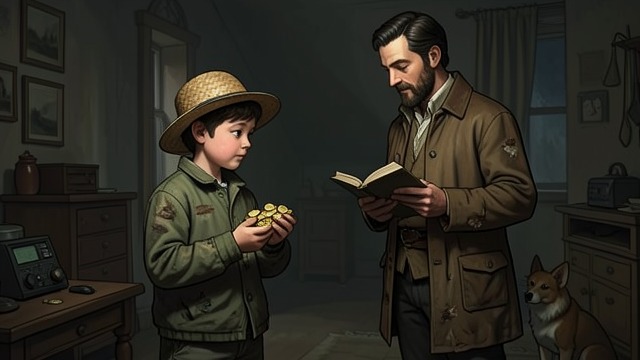
Money for Geppetto
A Chance to Repay
Fire Eater gives Pinocchio five gold pieces for Geppetto after hearing that the old man sold his coat to buy a schoolbook. Pinocchio sets out intending to provide his father with a proper coat and a book.
The Stakes of Temptation
The money has a clear and compassionate purpose. That purpose makes the later deception more damaging: Pinocchio is not simply gambling his own savings but risking a gift meant for someone who sacrificed for him.
The Promise of a Harvest
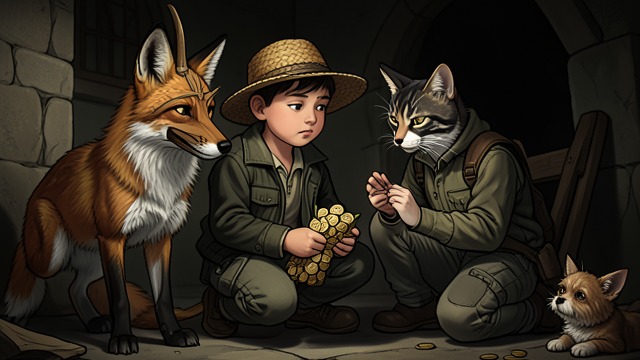
Easy Riches Offered
A Scheme Disguised as Help
The Fox promises to multiply Pinocchio’s coins by planting them in the Field of Wonders. The Cat echoes the claim, while both present themselves as people who work only to enrich others.
Desire Over Reason
Pinocchio wants to believe that his father can quickly escape poverty. He accepts the fantasy despite warnings and despite his own earlier resolution to return home.
The Coins Disappear
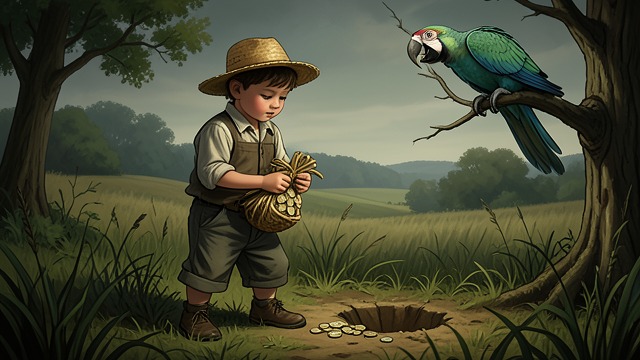
A Harvest That Never Comes
Hope Delayed
Pinocchio returns to find no tree or gold coins. He waters the spot again, trying to preserve the expectation that his investment will succeed.
Exploitation Exposed
The Parrot tells him that the Fox and the Cat have taken the money. Pinocchio digs frantically and confirms the theft, learning that desire has made him an easy target.
Justice Becomes Punishment
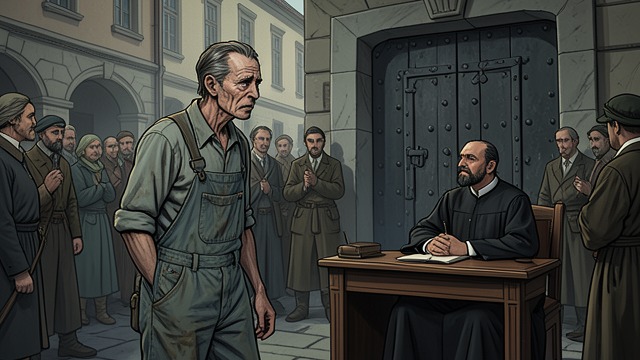
The Victim Imprisoned
A Plea for Redress
Pinocchio goes to court with the names and descriptions of the thieves. The Judge listens sympathetically, then orders him jailed for having been robbed.
Institutional Absurdity
The sentence turns the loss of money into a loss of liberty. Pinocchio’s experience shows that a victim may be punished when authorities value a convenient ruling over the truth.
Refusing the Old Bargain

An Answer to the Swindlers
The Pair Begs
The Fox and the Cat ask Pinocchio for alms, now genuinely reduced to poverty. Their former appearance of weakness has become real through age, deprivation, and loss.
A Changed Judgment
Pinocchio refuses to help them, invoking the consequences of stolen money. He no longer confuses a persuasive performance with trustworthy character.
The morning after the theater performance
On the road toward the City of Simple Simons
After the false planting ritual
Shortly after the theft
After the escape from the Shark
